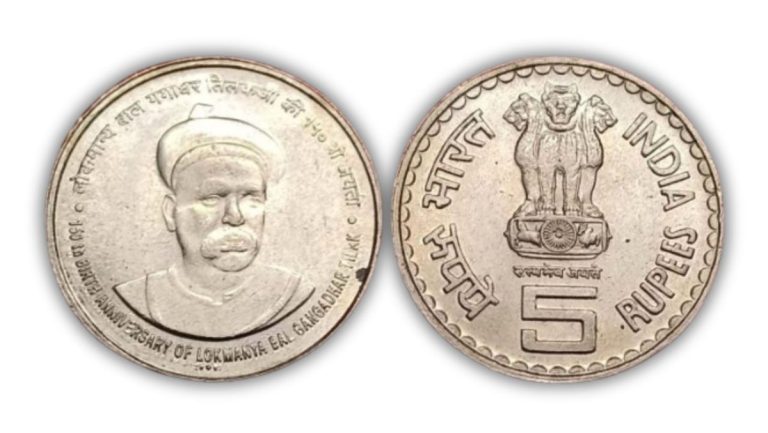
In commemoration of the 150th birth anniversary of Lokamanya Bal Gangadhar Tilak, the Government of India issued a ₹5 commemorative coin on 23 July 2007 for general circulation. Shortly after its release, it was observed that the inscription “Bal Gangadhar तिलकजी” appeared on the coin, where “ji” is an honorific suffix. This led to objections from certain leaders and scholars, who pointed out that such an honorific had not been used on earlier commemorative coins, even those issued in memory of national leaders like Mahatma Gandhi or Jawaharlal Nehru. As a result, the minting of the original variety was halted, and the coining die was modified to remove the word “ji”, leading to the issue of a revised version of the coin.
Monday, 12 January 2026

COMMEMORATIVE COIN SERIES- RS.5 (CU NI) CROP SCIENCE COIN-DETAILS &ESTIMATES
The Crop Science ₹5 copper-nickel (Cu-Ni) coin is a commemorative coin issued by the Government of India to highlight the importance of agriculture, crop science, and food security. India, being an agrarian economy with millions dependent on farming, has celebrated advancements in agricultural research and crop improvement through this special coin.
🪙 Coin Specifications
-
Country: India
-
Denomination: ₹5 (Five Rupees)
-
Metal: Copper-Nickel (Cu-Ni) alloy
-
Shape: Round
-
Weight: Approx 9 grams (typical for Cu-Ni ₹5 coins)
-
Diameter: Approx 23–25 mm
-
Edge: Reeded / Security edge
-
Alignment: Medal alignment
Exact specifications can vary slightly by year and mint.
🎨 Design Details
Obverse (Front):
-
Features the Lion Capital of Ashoka – India’s national emblem
-
Inscriptions: “भारत • INDIA” and सत्यमेव जयते
-
Represents sovereignty and national identity
Reverse (Back):
-
Central design theme: Symbolic representation of crop science
(often shows stylized crops, scientific elements, or growth motifs) -
Denomination “₹5” with inscriptions referring to Crop Science / Agriculture Theme
-
Year of issue at the base
The reverse design celebrates agricultural innovation, reflecting India’s progress in fields like genetics, crop breeding, agricultural research, and food production.

🏛️ Numismatic Significance
-
Part of India’s commemorative coin series celebrating national achievements
-
Highlights the role of crop science in food security
-
Appeals to collectors interested in theme coins (agriculture, science)
-
Often collected along with other ₹5 Cu-Ni theme coins
💰 Approximate Market Value (2025)
| Condition | Approx Value (₹) |
|---|---|
| Circulated | ₹3000 – ₹4500 |
| Fine / Very Fine | ₹5000 – ₹7000 |
| Extra Fine (XF) | ₹8000 – ₹15000 |
| Uncirculated (UNC) | upto – ₹25,000+ |
| Mint Set / Brilliant UNC | ₹ – ₹30,000+ |
Saturday, 10 January 2026
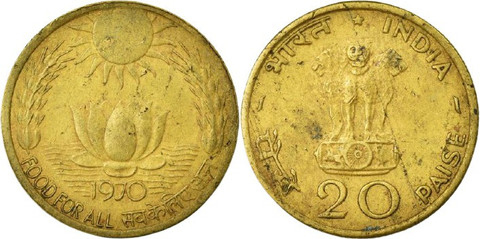
Sun–Lotus 20 Paise coin- Brass Metal
The Sun–Lotus 20 Paise coin is one of the most recognizable decimal coinage issues of India, introduced after the country adopted the decimal system in 1957. This coin symbolizes national progress, prosperity, and cultural heritage, making it an important piece in Indian numismatics.
The coin features the Lion Capital of Ashoka on the obverse, along with the legend भारत INDIA and सत्यमेव जयते. The reverse design displays a radiant Sun above a blooming Lotus, representing energy, growth, purity, and resilience, values deeply rooted in Indian philosophy and symbolism. The denomination 20 PAISE is clearly inscribed below the design.
Initially issued brass , the Sun–Lotus 20 Paise coin circulated widely from the 1960s through the early 1970s. Due to inflation and reduced purchasing power, the denomination was eventually withdrawn from circulation, adding to its nostalgic and historical appeal.
🪙 Design & Symbolism
-
Obverse: Lion Capital of Ashoka with भारत INDIA and सत्यमेव जयते
-
Reverse: Rising Sun above a Lotus flower with the denomination
-
Symbolism:
-
Sun – energy, progress, renewal
-
Lotus – purity, resilience, national identity
-
This design made the coin one of the most visually appealing small-denomination coins of India.
⚙️ Metal & Physical Details
-
Metal: Brass / Brass-based alloy
-
Denomination: 20 Paise
-
Shape: Round
-
Period of Issue: Mainly 1960s–1970s
-
Edge: Plain
The brass composition gives the coin a yellowish-gold appearance, making it easily distinguishable from later aluminium issues.
🏛️ Historical Importance
-
Part of India’s early decimal currency after 1957
-
Widely used in daily transactions during the 1960s
-
Withdrawn as inflation reduced the value of small denominations
-
Today, it represents nostalgia and transition in Indian coinage
💰 Approximate Market Value (India – 2025)
| Condition | Market Value (₹) |
|---|---|
| Heavily Circulated | 20 – 50 |
| Fine / Very Fine | 80 – 150 |
| Extra Fine (XF) | 180 – 300 |
| Uncirculated (UNC) | 350 – 700+ |
| Mint Set / Brilliant UNC | 800 – 1,500+ |
📌 Values depend on condition, surface quality, color tone, and collector demand
Today, the Sun–Lotus 20 Paise coin is popular among beginner collectors, thematic collectors, and decimal coin enthusiasts. While most examples are affordable, uncirculated and mint-set specimens are actively sought after for their sharp details and original finish.
Mahatma Basaveshwar ₹5 Cu-Ni Commemorative Coin (India)
The Mahatma Basaveshwar ₹5 copper-nickel commemorative coin was issued by the Government of India in 2015 to honor Jagadguru Basaveshwara (Basavanna), the 12th-century philosopher, social reformer, and founder of the Lingayat movement. The coin commemorates his enduring contributions to social equality, ethical living, and spiritual democracy in Indian society.
The coin is struck in copper-nickel (Cu-Ni) and was released for general circulation, making it accessible to the public as well as collectors. The obverse features the Lion Capital of Ashoka with the legend सत्यमेव जयते and the country name भारत INDIA. The reverse bears a dignified portrait of Mahatma Basaveshwar, along with his name and the denomination ₹5.
This commemorative issue highlights Basaveshwara’s ideals such as Kayaka (work as worship), Dasoha (service to humanity), and his strong stand against caste discrimination and social inequality. The coin holds special importance in Karnataka and among followers of Basava philosophy, while also being significant in modern Indian numismatics.
Though not rare, the Mahatma Basaveshwar ₹5 Cu-Ni coin is valued for its cultural, historical, and educational significance, and is a popular addition to Indian commemorative coin collections.
Market Value of Mahatma Basaveshwar ₹5 Cu-Ni Coin (India)
The Mahatma Basaveshwar ₹5 copper-nickel commemorative coin (2015) is a relatively modern Indian commemorative issue. While it is widely available in circulation, its collector value depends on condition, demand, and presentation (such as whether it’s uncirculated or part of a mint set). Below are approximate market values based on the current numismatic market (India, 2025):
| Condition | Approx Market Value (₹) |
|---|---|
| Circulated | ₹20 – ₹60 |
| Fine / Lightly Used | ₹80 – ₹150 |
| Extremely Fine (XF) | ₹150 – ₹300 |
| Uncirculated (UNC) | ₹300 – ₹750+ |
| Mint Set / Brilliant UNC | ₹800 – ₹1,500+ |
NOTE: INTERESTED BUYERS/COIN COLLECTORS CAN CONTACT; HYDCOINZ@GMAIL.COM
Tuesday, 6 January 2026
Rs.5 coin india Republic- Hyd Mint coin; Market value
The 2004 ₹5 coin from Hyderabad Mint is part of India’s modern circulation coinage and is commonly collected by beginners, mint-collection enthusiasts, and denomination set builders. Though not rare, it holds importance due to its mint mark identification and role in post-2000 Indian coinage.
🪙 Basic Details
-
Denomination: ₹5 (Five Rupees)
-
Year of Issue: 2004
-
Mint: Hyderabad Mint
-
Mint Mark: ⭐ Star (★) below the year
-
Metal Composition: Copper-Nickel (Cu-Ni)
-
Shape: Round
-
Weight: Approx. 9 grams
-
Diameter: Approx. 23 mm
-
Edge: Security edge (reeded / patterned)
-
Alignment: Medal alignment

🎨 Design Description
Obverse (Front)
-
Lion Capital of Ashoka in the center
-
Legend: सत्यमेव जयते below the emblem
-
Country name: भारत INDIA
Reverse (Back)
-
Denomination: ₹5 / FIVE RUPEES
-
Year: 2004
-
Hyderabad Mint Star (★) below the date
🏭 About Hyderabad Mint (HYD)
-
One of India’s oldest mints
-
Known for using ★ (star) mint mark
-
Produces circulation coins and commemorative issues
-
Coins from Hyderabad Mint are actively tracked by collectors for mint-wise sets
💰 Market Value (Approx. 2025)
| Condition | Value (₹) |
|---|---|
| Circulated | 1000 – 2000 |
| Very Fine (VF) | 2500 – 3000 |
| Uncirculated (UNC) | – 4500 |
| Mint Set / Brilliant UNC | Higher premium |
🔎 Value depends on condition, luster, scratches, and collector demand.
⭐ Collector Interest
-
Ideal for mint mark collections
-
Common but desirable in UNC condition
-
Frequently included in:
-
Year sets (2004 coins)
-
Mint-wise Indian coin collections
-
₹5 denomination type sets
-
📚 Numismatic Notes
-
Copper-Nickel ₹5 coins were gradually phased out after mid-2000s
-
Replaced later by stainless steel and bimetallic coins
-
2004 issues represent the last phase of Cu-Ni circulation coins
1954 One Rupee Coin India- Rare coin; prominent coin for collection in indian republic coin series
The 1954 One Rupee coin of India is a classic post-Independence rupee, highly regarded by collectors for its large size, and historical significance. Issued during the early years of the Republic of India, this coin represents stability and continuity in India’s monetary system after 1947.
🪙 Historical Background
The 1954 ₹1 coin belongs to this prestigious copper nickel series and reflects the economic and administrative consolidation of the young nation. These coins were widely circulated and formed the backbone of everyday transactions in the 1950s.
🔍 Technical Specifications – 1954 One Rupee Coin
-
Denomination: ₹1 (One Rupee)
-
Year: 1954
-
Metal: cu ni
-
Weight: ~11.66 grams
-
Diameter: ~30.5 mm
-
Shape: Round
-
Edge: Reeded
-
Alignment: Medal alignment
Obverse Design
-
Legend: सत्यमेव जयते
-
Country name: भारत INDIA
Reverse Design
-
Denomination: ONE RUPEE / एक रुपया
-
Year: 1954
-
Decorative floral wreath

🏭 Mint Varieties
-
No Mint Mark: Mumbai (Bombay) Mint
-
Dot (•): Hyderabad Mint
Mint marks play a role in collector preference and pricing, especially in higher grades.
💰 Approximate Market Value (India – 2025)
| Condition | Market Value (₹) |
|---|---|
| Heavily Circulated | 1,500 – 2500 |
| Fine (F) | 2,500 – 3,000 |
| Very Fine (VF) | 3,500 – 8,000 |
| Extra Fine (XF) | 7,000 – 12,000 |
| Uncirculated (UNC) | 15,000 – 35,000+ |
💡 Prices vary based on condition, mint mark, eye appeal, and market demand.
⭐ Why the 1954 One Rupee Coin Is Valuable
-
Large-size “big rupee” design
-
Issued during early Republic era
-
Strong demand among Indian and international collectors
-
Popular in type sets, and vintage coin portfolios
📝 Conclusion
The 1954 One Rupee Indian coin is a highly collectible coin that combines historical importance with precious value. Whether you are a beginner numismatist or an advanced collector, this coin remains a cornerstone of Indian coin collections and continues to show strong demand in the numismatic market.
Monday, 5 January 2026
1989–ONE RUPEE COMMEMORATIVE (JAWAHARLAL NEHRU) CENTENARY COIN
Pandit Jawaharlal Nehru, the first Prime Minister of independent India, served the nation from 1947 to 1964 and is remembered as the chief architect of modern India. His vision of democracy, scientific temper, education, and industrial development continues to influence India’s growth. To commemorate the centenary of his birth (1889–1989), the Government of India issued a special series of commemorative coins in 1988, marking an important chapter in Indian numismatic history.
These coins were released on 14 November 1988, which is observed nationwide as Children’s Day, reflecting Nehru’s deep affection for children and his emphasis on education.
🪙 Overview of the 1988 Jawaharlal Nehru Coin Series
The Jawaharlal Nehru Birth Centenary Coin Series (1988) included both circulation coins and collector-only proof and uncirculated issues, making it a comprehensive commemorative program.
Denominations Issued:
-
₹1 (One Rupee) – General circulation
-
₹5 (Five Rupees) – General circulation
-
₹20 (Twenty Rupees) – Proof & Uncirculated (Collector issue)
-
₹100 (One Hundred Rupees) – Proof & Uncirculated (Collector issue)
📌 ₹1 Jawaharlal Nehru Coin – 1988
Key Details:
-
Metal: Copper-Nickel
-
Shape: Round
-
Obverse: Lion Capital of Ashoka with denomination
-
Reverse: Portrait of Jawaharlal Nehru with centenary legend
Numismatic Importance:
-
Widely circulated and affordable for collectors
-
Popular entry-level coin for commemorative collections
-
Available in different mint varieties


📌 ₹5 Jawaharlal Nehru Coin – 1988
Key Details:
-
Metal: Copper-Nickel
-
Purpose: General circulation
-
Design: Similar portrait theme with higher denomination
Collector Interest:
-
First generation of ₹5 commemorative circulation coins
-
Scarcer than ₹1 in high-grade condition
-
Frequently collected as part of complete Nehru sets

🏅 ₹20 Jawaharlal Nehru Coin – 1988 (Collector Issue)
Key Details:
-
Metal: Silver
-
Finish: Proof and Uncirculated
-
Issued by: Government of India for collectors
-
Packaging: Mint-issued presentation cases
Importance:
-
Not released for circulation
-
Strong demand among silver coin collectors
-
Appreciates steadily due to silver content and historical value

Subscribe to:
Comments (Atom)